

Login
Disclaimer
What is Draping and Why Does it Matter in Massage Therapy?
Tuesday, July 28, 2026, 03:04 PM
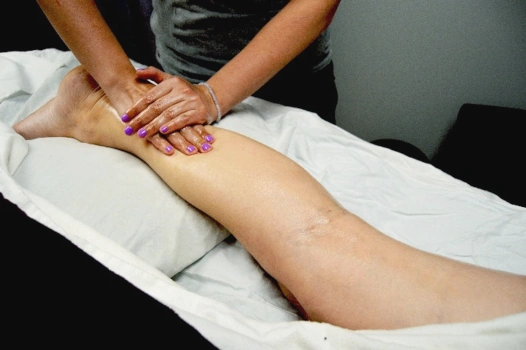
Draping is a technique used by massage therapists and holistic health practitioners to maintain client privacy, dignity, and comfort. In standard therapeutic massage, the client is covered from neck to feet by a sheet, blanket, and/or towel when they are on the massage table.
The massage therapist will then strategically uncover only the part of the body they are actively working on. For example, if they are working on the right leg, only the right leg would be uncovered, while the rest of the client's body remains covered.
Draping is a part of professionalism, providing an ethical environment for the therapy to take place. It must be combined with full, informed consent, which is obtained before each assessment, reassessment, or treatment.
Professional Standards
Members of the Natural Health Practitioners of Canada are held to high professional standards, which includes draping guidelines. These standards help maintain appropriate boundaries between practitioner and client covering technical, interpersonal, and safety aspects.
Standards specify that practitioners should protect client modesty throughout the treatment and never expose sensitive areas, including genitalia and gluteal cleft.
Professional draping is just one part of creating a safe treatment environment. The massage therapist will also preserve client confidentiality, create a judgement-free environment to ask questions and express concerns, and treat the client with respect throughout the session.
What Can You Expect as a First-Time Client?
During your initial intake and assessment, you can discuss your comfort level with your massage therapist. Draping can be adjusted to your preference as long as it still preserves your privacy and modesty.
Once the intake is complete, your massage therapist will leave the treatment room while you change. They will knock or verbally confirm that you’re ready and in position on the table before re-entering.
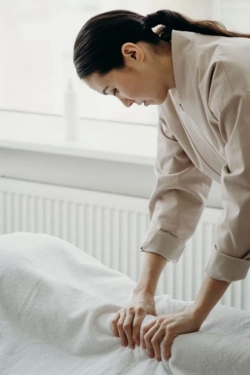
When they begin the session (and throughout), they will adjust the draping as needed, tucking the sheet around a leg or under your arm to ensure you stay covered. Draping techniques may be used regardless of your level of undress.
Techniques may also vary depending on the type of massage, such as sports or prenatal massage. For example, during abdominal massage, additional draping may be used to appropriately expose the stomach area.
Your massage therapist will let you know when it is time to turn from your stomach to your back or vice versa. At this point, they will rearrange the draping to make it easier to turn over while staying properly covered.
The sheets are freshly laundered and table sanitized between every client to protect public health.
Common Myths and Misconceptions About Draping
Myth: Draping has no set standard and does not require any training.
Draping is part of a massage therapist’s education in a recognized 2,200 massage program and is covered in Standards of Practice. Draping may be adjusted based on client anatomy, mobility, and comfort level.
Myth: You have to be fully undressed during a massage.
Clients may undress as much or as little as they are comfortable with. Many massage techniques can be performed effectively over clothing or a sheet.
Myth: Draping is only about modesty.
While draping protects modesty, it is also about establishing professional boundaries, getting informed consent, preserving warmth, and encouraging relaxation.
Myth: If you ask for more draping, the therapist will think you are uncomfortable with them.
Massage therapists practise client-centered care, which means they respect your individual preferences and will make adjustments as requested.
Myth: Clients shouldn’t speak up about draping; the massage therapist knows what they're doing.
Communication and consent should be ongoing throughout the session. Draping can be adjusted at any time, so you should let your practitioner know if you feel too exposed, too cold, or uncomfortable for any reason.
Questions?
Your comfort is priority, and draping is designed to protect your privacy and allow your therapist to provide effective treatment.
Our Practice Management department is here to help if you have any further questions about draping or our professional standards! Please reach out to practicemanagement@nhpcanada.org.